
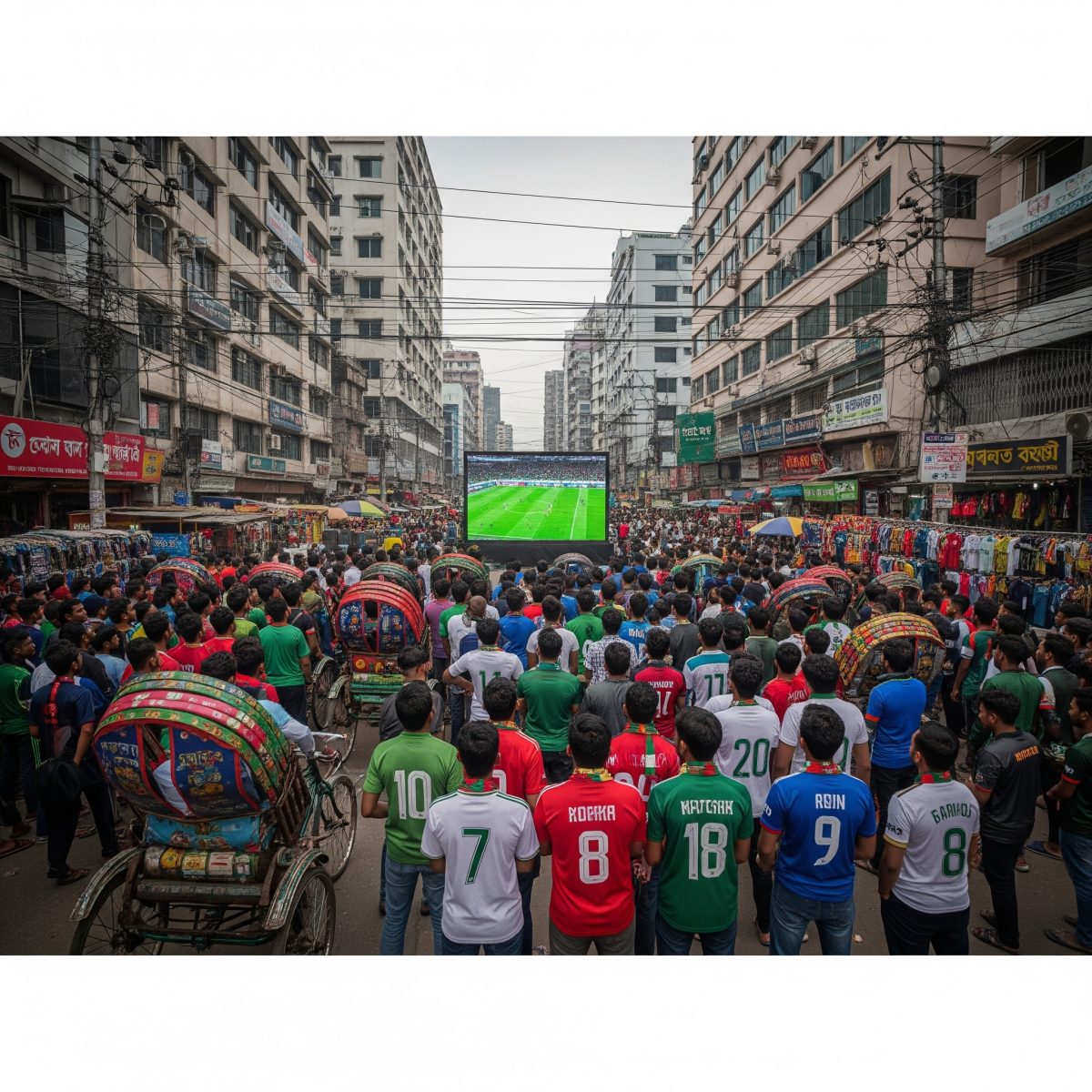

Football has long been more than a sport in Bangladesh – it is a cultural phenomenon. From the days when Brazil and Argentina divided neighborhoods into rival factions during the World Cup, to the present where European clubs dominate screens and social media feeds, the country’s relationship with the game has undergone a dramatic transformation. What began as an inherited admiration for South American giants has matured into a wider embrace of European football, shaped by technology, television, and new generations of fans.

From Brazil and Argentina to Germany, Italy, and Beyond
In the 1980s and early 1990s, Bangladeshi fans primarily identified with Brazil and Argentina. These two footballing powerhouses dominated global tournaments, and their flair, drama, and star players made them household favorites. However, the 1990 World Cup marked the beginning of a shift. Germany’s victory, capped by their iconic jersey and efficient playing style, attracted a wave of Bangladeshi supporters.
By 1994, Italy had entered the picture. Roberto Baggio’s brilliance and heartbreak in the final left lasting impressions on young viewers. Families gathered around televisions in Dhaka, where matches became collective experiences. For many, these tournaments were more than games; they were cultural events that united households, neighborhoods, and entire communities.
The 1998 Turning Point
If one year could be pinpointed as the turning point of Bangladeshi football consumerism, it would be 1998. The France-hosted World Cup introduced collectibles, global marketing campaigns, and easily accessible coverage. European leagues also began expanding their reach, offering Bangladeshi fans the chance to watch club matches regularly.
This exposure meant that fandom was no longer confined to national teams. Clubs like Manchester United, Real Madrid, Barcelona, and AC Milan gained loyal followings. For the first time, young Bangladeshi supporters wore club jerseys, debated league rivalries, and followed European domestic competitions with as much passion as World Cups.
Early 2000s: Internet and Identity
The early 2000s ushered in a new phase, defined by the internet. Football fans formed online communities through forums, blogs, and later social media platforms. This digital shift allowed Bangladeshi supporters to engage with the game in real time, tracking their favorite players and clubs beyond televised matches.
Fantasy football and video games like FIFA created deeper connections with European leagues, particularly the English Premier League. Players such as David Beckham, Thierry Henry, and later Cristiano Ronaldo became global icons. For Bangladeshi fans, these figures represented more than skill—they embodied style, charisma, and celebrity culture.
Spain’s Golden Era and Club Dominance
Spain’s triumphs between 2008 and 2012, combined with the dominance of Barcelona and Real Madrid, added another dimension to Bangladeshi football culture. Fans debated Lionel Messi versus Cristiano Ronaldo with an intensity that rivaled older generations’ Brazil-Argentina arguments. Social media amplified this rivalry, giving supporters direct access to highlight reels, press conferences, and behind-the-scenes content.
Meanwhile, the rise of players from smaller European nations also shifted allegiances. Belgium’s “golden generation” of De Bruyne, Hazard, and Lukaku created unlikely new fan bases. This trend highlighted a growing detachment from South American dominance, as European players consistently filled FIFA’s “Team of the Year” lists, overshadowing Brazil and Argentina.
The Decline of South American Stronghold
Historically, Brazil and Argentina were untouchable in Bangladesh. However, their declining performances on the international stage, coupled with Europe’s rise, reshaped fan loyalties. The last four World Cups have been won by European nations, and European clubs dominate global football rankings. Younger Bangladeshi fans are more likely to identify with clubs and players based in Europe than with traditional South American teams.
This shift suggests that Brazil and Argentina may no longer enjoy uncontested popularity in Bangladesh. Instead, fans are embracing a diverse range of national teams and clubs, with loyalty often tied to European football stars.
Football, Community, and Betting Culture
While the cultural shift toward European football is undeniable, the modern fan experience in Bangladesh is also being reshaped by technology and digital platforms. Beyond streaming matches and engaging on social media, many fans are exploring interactive ways to engage with the game. This includes fantasy football leagues, prediction games, and in some cases, online betting.
The presence of a betting site Bangladesh now provides enthusiasts with another avenue to translate their passion into real-time engagement. Though betting remains a controversial and legally sensitive subject in the country, its growing underground popularity reflects the depth of fan investment. For many, placing a prediction or analyzing odds is another form of expressing devotion to their favorite teams and players.
Football as a Cultural Identity
In Bangladesh, football has always been tied to identity. In the 1990s, supporting Brazil or Argentina was as much about belonging to a community as it was about the sport itself. Today, supporting Manchester United, Barcelona, or Bayern Munich serves a similar purpose. These allegiances are reinforced through jerseys, online groups, watch parties, and discussions that span generations.
The difference lies in the diversity of choices. No longer restricted to two giants, Bangladeshi football fans can now pick from dozens of clubs and nations to support. This broader palette reflects not only football’s globalization but also the growing sophistication of Bangladeshi audiences.
The Future: Green and Red on the Map
The ultimate dream, of course, is to see Bangladesh itself emerge as a competitive football nation. For now, the national team plays a modest role in the global arena, but local fans hope that one day the red and green will join the ranks of the world’s competitive sides. Until then, they channel their passion through European clubs and tournaments.
If current trends continue, the Brazil-Argentina duopoly in Bangladesh may fade into history. In its place, a mosaic of European allegiances will dominate the landscape, from Premier League giants to emerging stars from smaller European nations.
Conclusion
Bangladesh’s football journey is a story of transformation. From black-and-white televisions broadcasting Brazil’s magic, to high-speed internet streaming Champions League nights, every generation has found new reasons to fall in love with the game. Today, that love leans firmly toward Europe, reflecting broader global trends and the rise of digital engagement.
What remains constant, however, is the passion. Whether it’s a late-night match in Dhaka, a heated Messi-Ronaldo debate, or a fan quietly placing a prediction online, football continues to bind people together. The colors may change, but the devotion remains timeless.